

Introduction
When Silence Turned Blue: Why Keith Urban – Blue Ain't Your Color Still Breaks the Heart So Beautifully
Some songs do not need to raise their voices to leave a lasting mark. They arrive quietly, almost like a conversation overheard in a dimly lit room, and before long they have found a place somewhere deep inside the listener. Keith Urban – Blue Ain't Your Color is one of those rare songs. It does not rely on grand drama or emotional excess. Instead, it moves with patience, grace, and the kind of tenderness that older listeners often recognize immediately as something true.
At its heart, this is a song about seeing pain in someone else before they even speak it aloud.
That alone gives it remarkable emotional power.
When Keith Urban released "Blue Ain't Your Color," he gave country music one of its most quietly devastating modern ballads. The song unfolds like a late-night scene many listeners can picture with perfect clarity: a woman sitting alone in a bar, distant and emotionally worn, while the world around her continues as if nothing has happened. There is no need for spectacle. The sadness is already in the room.
Urban's narrator notices it immediately.
And in that simple act of noticing, the song becomes deeply human.
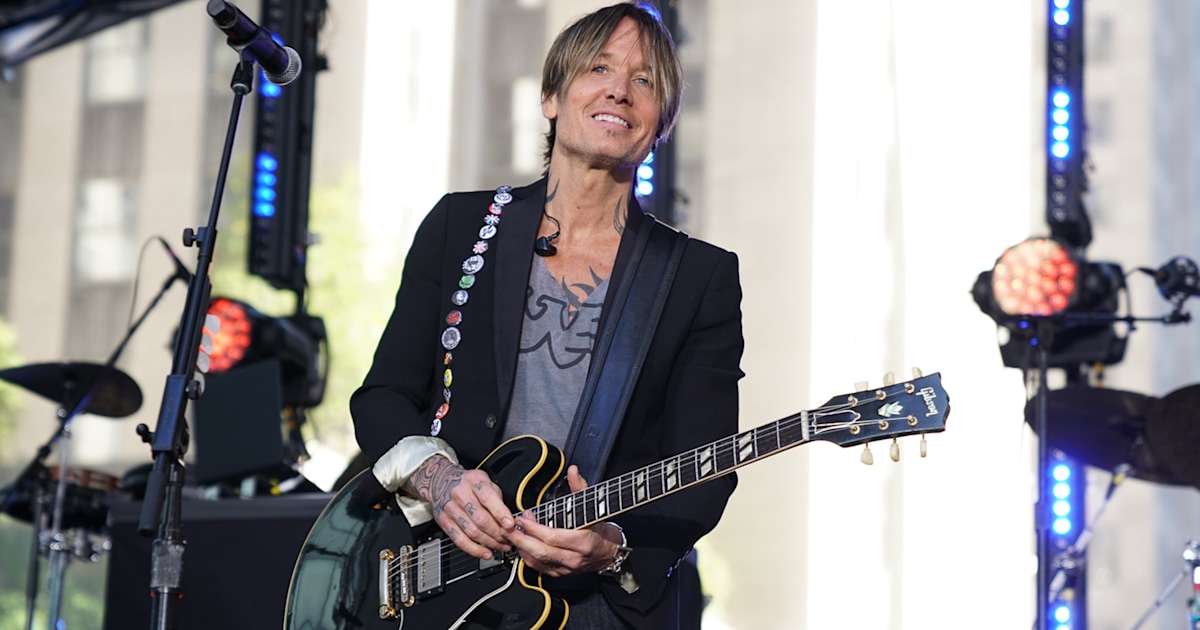
For older, more reflective audiences, this kind of songwriting often carries extraordinary emotional weight. Life experience teaches us that heartbreak rarely announces itself loudly. More often, it settles quietly into a person's face, their posture, the way they stare past the room rather than into it.
This song understands that truth.
The title itself is one of the most elegant lyrical choices in modern country music. "Blue" works on multiple levels. It is a color, of course, but it is also sadness, emotional exhaustion, and loneliness. By saying "blue ain't your color," the narrator is doing something far more meaningful than flirting.
He is gently reminding someone that sorrow does not define them.
That message is profoundly moving.
It suggests that pain may visit, but it does not own the person carrying it.
That distinction is something older listeners often feel deeply.
There comes a point in life when people understand that difficult seasons do not erase identity. A hard year, a broken relationship, a period of grief—none of these things become the whole story. They are chapters, not the title.
This song speaks directly to that wisdom.
Musically, Keith Urban – Blue Ain't Your Color is beautifully restrained. The arrangement leans into slow-burning elegance: gentle guitar lines, subtle percussion, and a smooth melodic structure that allows the lyric to breathe. Nothing is rushed.
That patience is one of the song's greatest strengths.
Rather than forcing emotion, it lets the feeling unfold naturally.
The production almost mirrors the emotional space of the scene itself—dim, quiet, and intimate.
For mature readers and longtime music lovers, this kind of restraint often feels more powerful than dramatic crescendos. The song trusts silence. It allows pauses to carry meaning.
And silence, as life teaches us, often says the most.
Keith Urban's vocal performance is central to why the song lingers so long after it ends.
He does not sing it like a performance.
He sings it like a conversation.
There is softness in his voice, but also conviction. He sounds less like someone trying to impress and more like someone trying to comfort. That distinction matters enormously.
This is not a song about seduction.
It is a song about recognition.
Recognition of hurt.
Recognition of beauty beneath the hurt.
Recognition that someone deserves better than the sadness currently resting on their shoulders.
For older audiences especially, this emotional gentleness often resonates more deeply than louder declarations of love or heartbreak.
Because by a certain age, people know that compassion is often more moving than passion.
A hand on the shoulder can say more than a speech.
A gentle observation can mean more than an argument.
This song lives in that emotional register.
There is also something deeply cinematic about it. One can almost see the scene unfold like a film: the glow of neon lights, the low murmur of conversation, the clink of glasses, and one person quietly seeing another in a way perhaps no one else in the room has.
That feeling of being seen is one of the most emotionally powerful themes in all music.
Not loved yet.
Not rescued.
Simply seen.
That alone can be life-changing.
Perhaps that is why the song continues to resonate so strongly with older readers and listeners. Many have lived through moments when someone recognized their pain before they had words for it. Those moments stay with us.
They become emotional landmarks.
The song also speaks to dignity in sorrow.
It does not shame sadness.
It does not dramatize suffering.
Instead, it treats heartbreak with grace.
There is profound maturity in that.
For thoughtful listeners, the song feels less like a romantic overture and more like an act of emotional kindness.
That may be why it has remained one of Keith Urban's most beloved recordings.
It captures something universal:
the longing to be reminded that pain is temporary and beauty still remains.
In a world often filled with noise, Keith Urban – Blue Ain't Your Color offers something rare.
Stillness.
Tenderness.
Compassion.
And perhaps that is what makes it so unforgettable.
It is not merely about heartbreak.
It is about the quiet human instinct to lift someone gently out of it.
By the final note, the song leaves behind a feeling older listeners know well: sadness may color the night, but it does not have to color the soul forever.
Sometimes all it takes is one voice, one moment, and one gentle truth.
Blue is not who you are.
It is only where you are right now.