
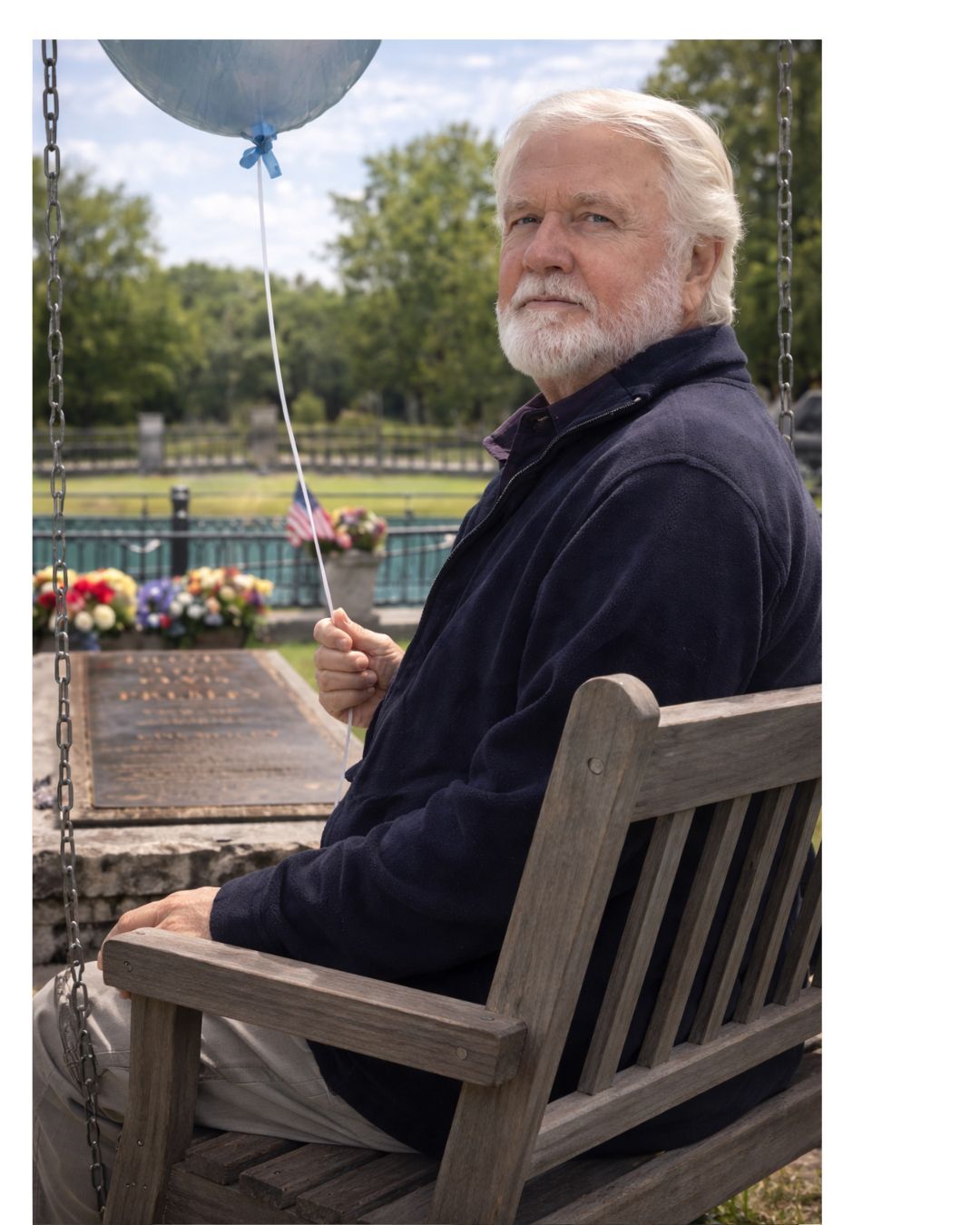
Introduction
At Last, a Voice Breaks the Silence: Bob Joyce, Elvis Presley, and the Mystery That Refused to Fade
For nearly half a century, one question has lingered in the hearts of music lovers, skeptics, and dreamers alike: did Elvis Presley truly leave the world in 1977—or did he somehow slip quietly into another life, hidden from the spotlight that once defined him?
It is a question that has fueled endless speculation, late-night conversations, and generations of curiosity. Blurry photographs surfaced. Stories emerged of chance encounters in small towns. Voices—uncannily familiar—echoed through unexpected places. And among the names most frequently drawn into this enduring mystery was that of Bob Joyce, a soft-spoken preacher whose appearance and voice stirred something deeply familiar in those who remembered Elvis at his peak.
Now, at 89, Bob Joyce has done something many thought might never happen—he has spoken.
In a world that often thrives on spectacle, his words arrived not with fanfare, but with quiet gravity. There were no flashing headlines in his tone, no attempt to shock or provoke. Instead, there was reflection. Calm. A sense of someone who had carried a question for a long time—not necessarily his own, but one placed upon him by the world.
For decades, Joyce had remained largely silent on the rumors. He continued his life in relative obscurity, preaching, singing, and connecting with a community far removed from the roaring stages Elvis once commanded. Yet the comparisons never faded. To some, the resemblance was uncanny. To others, it was coincidence shaped by longing. But to all, it was a mystery that refused to rest.
When Joyce finally addressed the speculation, his words carried the weight of time itself.
He acknowledged what so many had seen and wondered about—the similarities, the persistent whispers, the belief held by some that Elvis had not died, but instead chosen a quieter path, leaving fame behind in search of something more personal, more spiritual. It is, in many ways, a deeply human idea: that a man who had everything might one day choose to disappear from it all.
But Joyce did not lean into fantasy. He did not dramatize the decades of rumor that had followed him like a shadow. Instead, he spoke with humility, grounding his response in truth as he knew it, while also recognizing the emotional thread that tied so many people to the legend of Elvis.
And that is where this story becomes something more than a simple question of identity.
Because the mystery of Elvis Presley has never been only about whether he lived or died. It has been about what he represented—and what people were not ready to let go of.
For those who came of age during Elvis's rise, he was more than a performer. He was a moment in time. A voice that defined youth, rebellion, romance, and transformation. Letting go of Elvis was, in some ways, like letting go of an entire chapter of life.
So the theories endured.
They endured not because of evidence, but because of emotion.
Bob Joyce understood that. And perhaps that is why his statement resonated so deeply. He did not dismiss the curiosity or mock the belief. He treated it with a kind of quiet respect, as though he recognized that behind every theory was a person holding on to something meaningful.
For some, his words brought closure—a long-awaited answer to a question that had lingered for decades. For others, they changed very little. The mystery, after all, has never relied solely on facts. It lives in imagination, in memory, in the spaces where certainty gives way to hope.
And even now, as Joyce's voice adds clarity to the narrative, something remains.
A pause.
A hesitation.
A recognition that legends do not operate by ordinary rules.
Because Elvis Presley—whether viewed as a man, a myth, or something in between—transcended the boundaries of a single lifetime. His music continues to play. His image continues to appear. His influence continues to shape artists and audiences alike. In that sense, the idea that he could simply vanish has always felt incomplete.
Joyce's statement may answer the question on the surface. But beneath it lies something far more enduring: the realization that some stories are never truly about answers.
They are about connection.
They are about the way a voice can stay with you long after the song has ended.
They are about the way a presence can linger, not in physical form, but in memory so vivid it feels almost real.
As readers and listeners, we are left with a choice. We can accept the explanation, close the chapter, and move forward. Or we can hold onto the mystery—not as a denial of truth, but as a reflection of something deeper within ourselves.
Because perhaps the real reason this question has lasted so long is not that we doubted what happened in 1977.
Perhaps it is that we hoped, in some small, quiet way, that it wasn't the end.
And so, even now, as Bob Joyce speaks and the world listens, the story does not fully conclude. It simply shifts—becoming less about whether Elvis lived on in secret, and more about how he continues to live on in us.
Watch the video at the end of this article… and decide for yourself what you believe.